(Reuters Health) – Cancer specialists only rarely advise patients on lifestyle changes that could improve overall health and possibly also reduce the risk of recurrence, a new survey suggests. The survey of doctors from a Midwestern health system found that on... More »
For several decades, certain cancer centers have been allowed by the U.S. government to charge more for the care they give. A new study finds the care given at these centers isn’t very different from that received at other top-notch facilities. Since the early... More »
(Reuters Health) – Patients who see their doctors in the morning are a lot more likely to be referred for screenings for breast and colon cancer than patients with end-of-the-day appointments, a new study suggests. Researchers poring over records of more than ... More »
(Reuters Health) – Just because the flagship hospital gets good marks for patient care doesn’t mean results will be equally good in affiliated hospitals in the same network, a new study finds. Researchers found variable surgical outcomes across networks associ... More »
(Reuters Health) – Patients may have less access to palliative care at U.S. hospitals that primarily serve minorities, a study suggests. Minorities in the U.S. often receive worse healthcare and have worse outcomes, researchers note in JAMA Network Open. Non-w... More »
(Reuters Health) – At age 76 the risks of a repeat colonoscopy may exceed the benefits for seniors whose previous screenings have found no signs of cancer, but many older adults don’t like the logic behind this guideline based on life expectancy. A new study s... More »
(Reuters Health) – A screening test for colon cancer that looks for “invisible” blood in stool may also predict a heightened risk of premature death from other causes, a recent study suggests. Researchers examined data on 133,921 adults in Scotland who got scr... More »
(Reuters Health) – The cost of new anti-cancer drugs increased more than five-fold from 2006 to 2015, but a new analysis suggests that cancer patients and insurers may be getting less for their money. Anticancer medications account for the lion’s share of glob... More »
(Reuters Health) – Most Americans aren’t aware of cancer drug shortages that might lead some patients to receive less effective or more toxic treatments, a U.S. study suggests. In a nationally representative survey of 420 adults, just 16 percent said they knew... More »
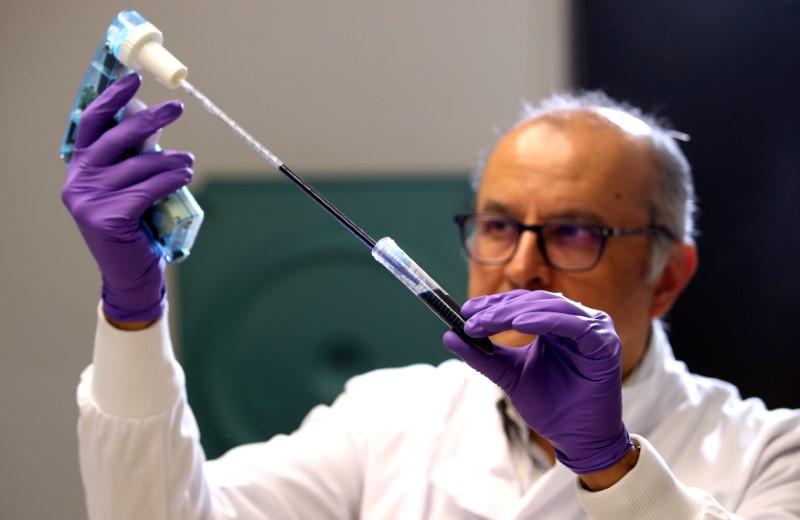
Professor Ketan Patel works in the lab at MRC Laboratory of Molecular Biology in Cambridge, Britain January 2, 2018. Picture taken January 2, 2018. REUTERS/Chris Radburn LONDON (Reuters) – Drinking alcohol produces a harmful chemical in the body which can lead... More »
The alcohol industry uses denial, distortion and distraction to mislead people about the risks of developing cancer from drinking, often employing similar tactics to those of the tobacco industry, a study said on Thursday. More »
By Andrew M. Seaman(Reuters Health) – People who want access to the best cancer treatment centers in the U.S. may want to avoid health insurance pla More »
By Carolyn Crist(Reuters Health) – Cancer patients receiving chemotherapy should have all their medications and herbal supplements reviewed by a phar More »
By Lisa Rapaport(Reuters Health) – Comfort care for advanced cancer patients is associated with fewer repeat hospitalizations and more hospice referr More »
By Madeline Kennedy(Reuters Health) – As cancer drug costs rise, U.S. cancer patients are more likely than other medical patients to struggle with pa More »
By Andrew M. Seaman(Reuters Health) – In general, childhood cancer survivors are just as satisfied with their sex lives as people who didn’t have ca More »
By Andrew M. Seaman(Reuters Health) – The number of older women in the U.S. being screened for breast cancer increased after the Affordable Care Act More »
By Andrew M. Seaman(Reuters Health) – Drugs recently approved around the world to fight cancer increased patients’ overall survival, but benefits va More »
By Kathryn Doyle(Reuters Health) – For patients with advanced cancer, palliative care should start early and be an integral part of treatment, not ju More »
(Reuters Health) – U.S. doctors and hospitals throw out almost $3 billion (roughly 2.7 billion euros) in unused cancer drugs each year because the medicines come in supersized single-use packages and excess medicine must be discarded for safety reasons, a rece... More »
(Reuters Health) – Taking one or two baby aspirins a day for at least five years was tied to a lower risk of colorectal cancer in a study from Denmark. Earlier studies had suggested that aspirin and non-steroidal anti-inflammatory drugs (NSAIDs) such as ibupro... More »