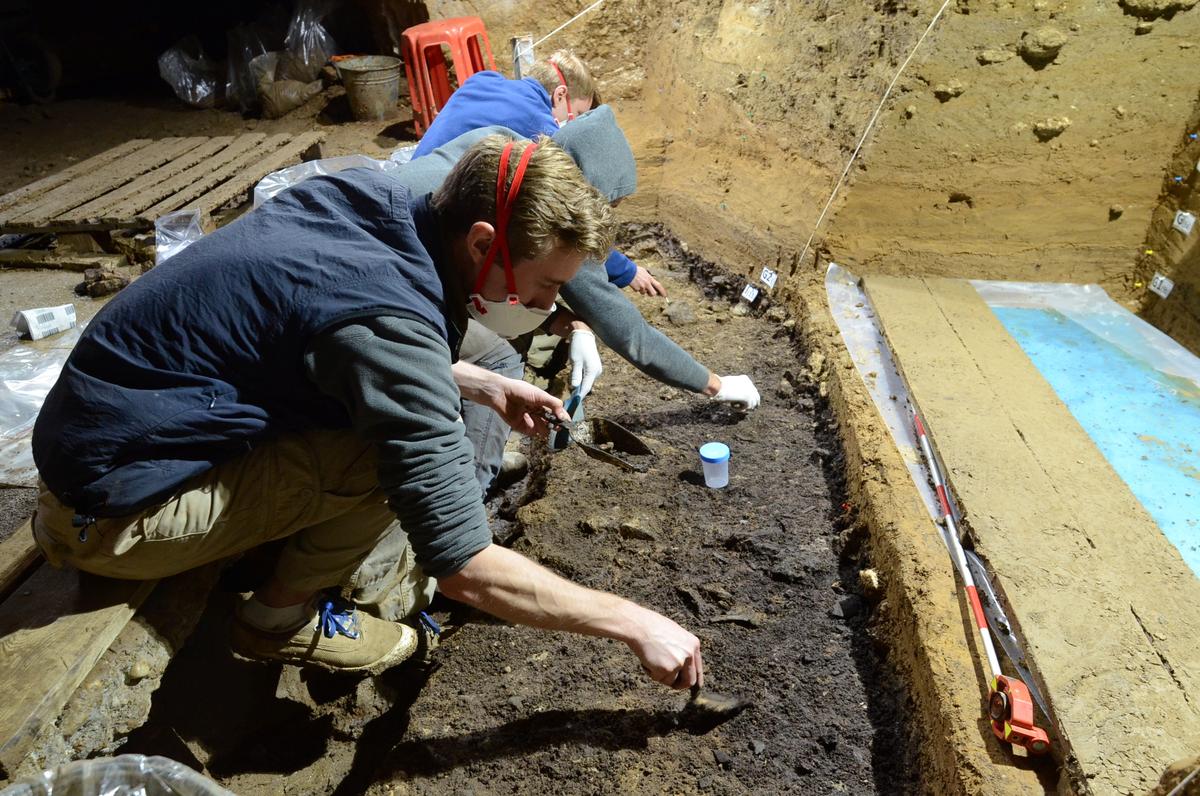
WASHINGTON (Reuters) – Fragmentary bone fossils and a molar found in Bulgaria dated to roughly 45,000 years ago show that Homo sapiens populations swept into Europe – until then a bastion for the Neanderthals – earlier than previously known, scientists said on... More »
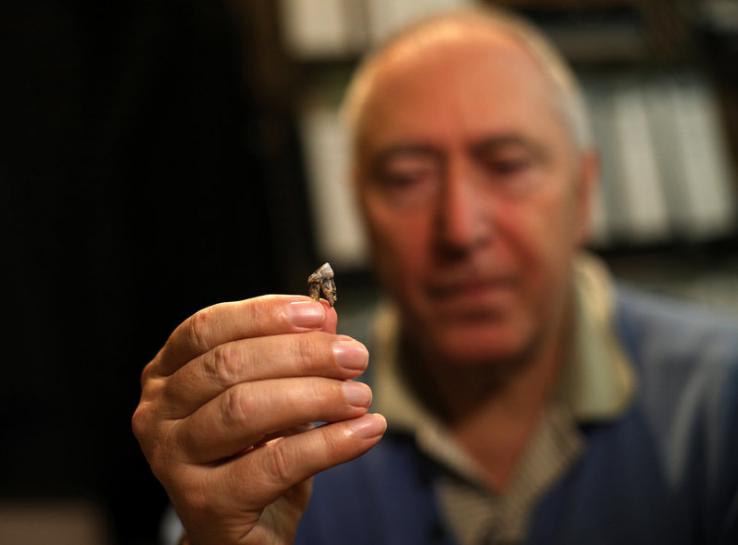
Professor Nikolai Spassov shows a model of an isolated tooth of Graecopithecus freybergi in his office in Bulgaria’s National Museum of Natural History in Sofia, Bulgaria May 29, 2017. REUTERS/Stoyan Nenov A team of excavators in Bulgaria has resumed a search ... More »
The lower jaw of the 7.175 million year old Graecopithecus freybergi (El Graeco) from Pyrgos Vassilissis, Greece is shown in this handout provided May 19, 2017. Courtesy of Wolfgang Gerber, University of Tübingen/Handout via REUTERS Fossils from Greece and Bul... More »
Professor Lee Berger holds a cast of the new Homo naledi skull at the Cradle of Humankind World Heritage site near Johannesburg, South Africa. REUTERS/James Oatway Scientists unveiled the first evidence on Tuesday that early humans co-existed in Africa 300,000... More »
Paleontologist Don Swanson points at rock fragments near a large horizontal mastodon tusk fragment at the San Diego Natural History Museum in San Diego, California, U.S., in this handout photo received April 26, 2017. San Diego Natural History Museum/Handout v... More »
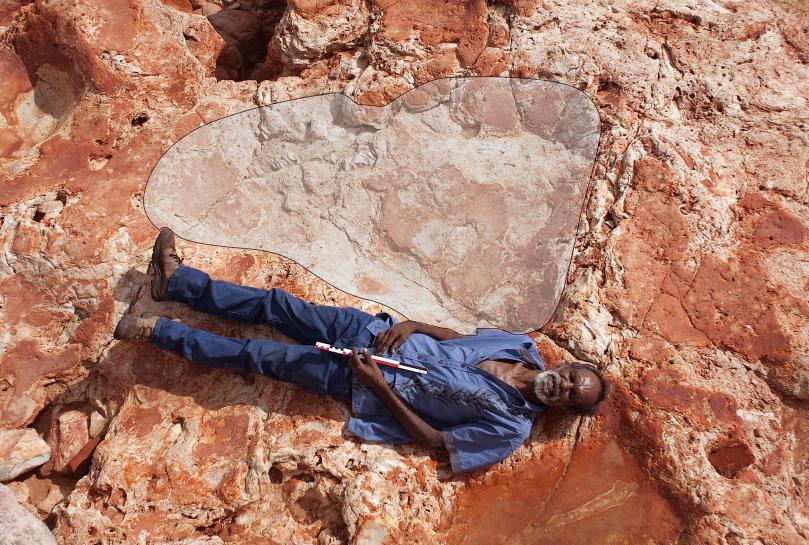
A supplied image of Aboriginal elder and Goolarabooloo Law Boss Richard Hunter alongside a 1.75m sauropod dinosaur track in the Lower Cretaceous Broome Sandstone, Walmadany area, Dampier Peninsula, in Western Australia, March 26, 2017. Picture taken March 26, ... More »
Allen Nutman (L) of the University of Woollongong and Vickie Bennet of the Australian National University hold a specimen of 3.7 billion-year-old fossils found in Greenland in Canberra, Australia, August 23, 2016. Picture taken August 23, 2016. Yuri Amelin/Aus... More »