


WASHINGTON (Reuters) – A senior U.S. Consumer Financial Protection Bureau official filed suit late on Sunday trying to prevent President Donald Trump from naming an acting head of the watchdog agency, but its top lawyer concluded Trump had the power to do so.
The moves were the latest dramatic developments in the fight over leadership succession of an agency created in 2011 under Democratic former President Barack Obama to protect consumers from predatory lending practices. Republicans in the White House and Congress have tried to weaken the agency.
The leadership of the agency was plunged into confusion on Friday after its outgoing Obama-era director Richard Cordray formally resigned and elevated his former chief of staff, Leandra English, to replace him on an interim basis until the Senate confirms a permanent successor named by Trump.
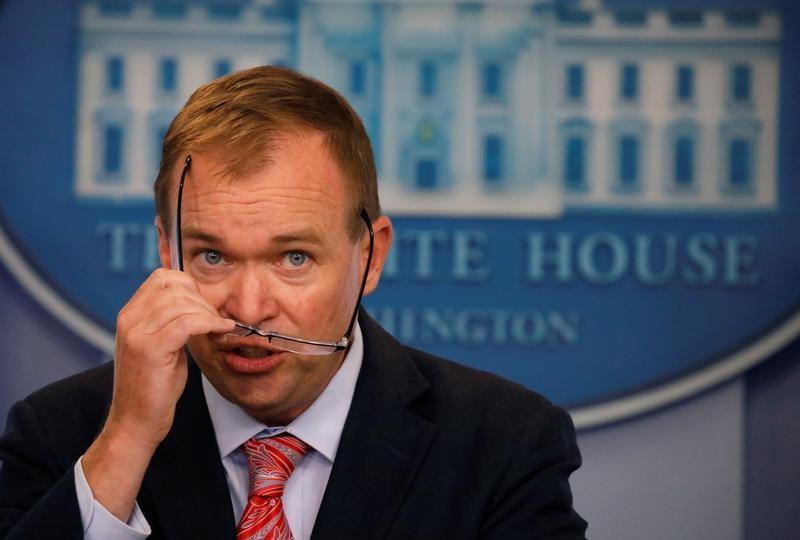
Hours later, the Republican president named Mulvaney — his budget chief and a harsh critic of the agency — as its acting director.
CFPB General Counsel Mary McLeod wrote a memo, first reported by Reuters, concurring with the opinion of the U.S. Justice Department that Trump had the power to appoint Mulvaney to the post.
“I advise all Bureau personnel to act consistently with the understanding that Director Mulvaney is the Acting Director of the CFPB,” McLeod’s memo stated.
Factbox: What is the U.S. Consumer Financial Protection Bureau?
Created after the 2008 financial crisis, the CFPB has issued rules and imposed steep penalties on banks, auto dealers, student lenders and credit card companies. [L8N1NW0MW]
Future enforcement activities could be stymied while the question of who runs the CFPB is decided.
Republican lawmakers argue that the agency wields too much unchecked power, adding that it burdens banks and credit card companies with unnecessary red tape.
Writing on Twitter, Trump on Saturday called the agency a “total disaster” that had “devastated” financial institutions.

 0 comments
 Share
Share

